

Advancing Neurofeedback in Tinnitus, Clinical Study
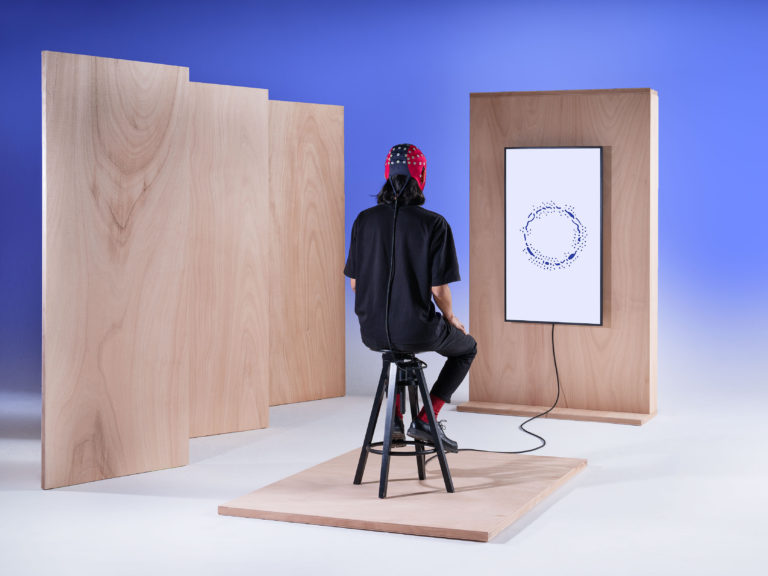
Tinnitus, the persistent perception of sound without an external source, affects millions and can severely impact the quality of life. Neurofeedback, a technique that trains individuals to regulate their brain activity through real-time feedback, has opened new perspectives.
A Swiss transdisciplinary research initiative aims to advance tinnitus therapy by developing protocols that better target the brain processes underlying tinnitus, while being more engaging for patients and grounded in scientific evidence. This consortium led by the University of Zurich and including the University of Fribourg, Bern University of Applied Sciences, EPFL+ECAL Lab, the University of Salzburg, and EPFL/University of Geneva brings together expertise in clinical neuroscience, cognitive psychology, design, and engineering. After three years of research and seven scientific publications, the project is now entering a new phase — testing the therapy’s effectiveness with patients at the University Hospital of Zurich.
Recent advances in neuroscience, especially through neuroimaging techniques, have led to the development of several models explaining how tinnitus arises. All of these models are based on the same idea: when parts of the hearing system are damaged, the brain starts processing sound differently.
These changes affect both auditory and non-auditory brain regions. This specific brain activity has been observed in people with tinnitus. Research therefore supports the view that chronic tinnitus originates and persists in the brain. One promising treatment is neurofeedback — a non-invasive method that helps people learn to adjust their brain activity using real-time visual or sound cues. A helmet records brain signals, while software analyses them and provides visual feedback to guide the training. Over time, this feedback loops encourages the brain to respond in healthier ways.
Previous studies have shown that neurofeedback has potential for people suffering from tinnitus. However, several improvements are still needed before a clear therapeutic effect can be established. This is exactly what a new transdisciplinary research initiative, supported by the Swiss National Science Foundation (SNSF), aims to achieve. Over three years, the research teams investigated the most effective neural targets for this type of therapy, how to best extract relevant information from brain signals, and which feedback stimuli are most efficient. Given that neurofeedback training is a delicate and time-consuming method, the user experience and motivation are critical. That’s why design plays a major role.
This research initiative is the first of its kind addressing these specific issues. The work, involving engineering, medicine, human centered design and psychology has already led to significant scientific publications. All of these findings are now being integrated into a dedicated neurofeedback protocol for tinnitus treatment. A clinical study to test its effectiveness begins in January at the University Hospital of Zurich.